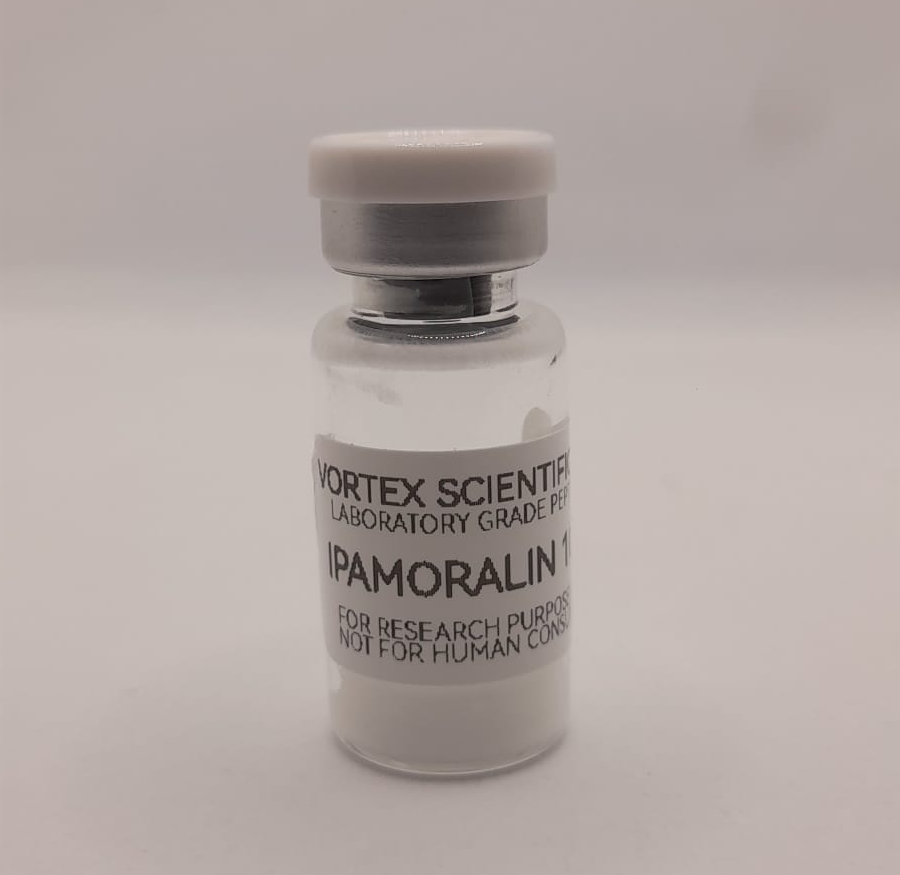
Description
Core Scientific Data
Chemical Profile:
Sequence: Aib-His-D-2-Nal-D-Phe-Lys-NH2.
Molecular Formula: C38H49N9O5
Molar Mass: Approximately 711.87 g/mol.
Solubility: High in distilled water (>200 mg/ml).
Mechanism of Action:
Target: Selectively binds to the GHSR-1a receptor in the pituitary gland and hypothalamus.
Function: Mimics the natural hormone ghrelin to trigger a pulsatile release of GH.
Selectivity: Unlike other secretagogues (e.g., GHRP-2 or GHRP-6), it does not elevate cortisol or ACTH levels even at doses 200 times higher than its effective dose for GH release.
Pharmacokinetics and Pharmacodynamics
Half-life: It has a relatively short terminal half-life of approximately 2 hours in humans.
Bioavailability: Estimated at roughly 20% after intranasal application.
Clearance: Systemic plasma clearance is notably lower than other GHRPs (e.g., 5-fold lower than GHRP-6), with primary excretion through urine.
Dosage Sensitivity: In human studies, maximal GH production rate was observed at 694 mIU/L/h with an SC50
(concentration for half-maximal stimulation) of 214 nmol/L.
Observed Biological Effects
Body Composition: Animal studies show dose-dependent increases in body weight gain and longitudinal bone growth.
Gastrointestinal Motility: Ipamorelin has been studied for treating postoperative ileus (POI) because it accelerates gastric emptying by stimulating gastric smooth muscle contractility.
Bone Health: It has shown potential in counteracting bone and muscle loss in steroid-treated animal models.
Current Regulatory and Legal Status
FDA Status: It is not FDA-approved for any medical condition and is currently classified for research use only.
Sports Integrity: Included on the World Anti-Doping Agency (WADA) Prohibited List (Section S2) and is banned in most competitive sports both in and out of competition.
Compound Risks: The FDA has issued warnings regarding the potential for immunogenicity and life-threatening reactions like anaphylaxis with unregulated peptide use.
Reviews
There are no reviews yet.