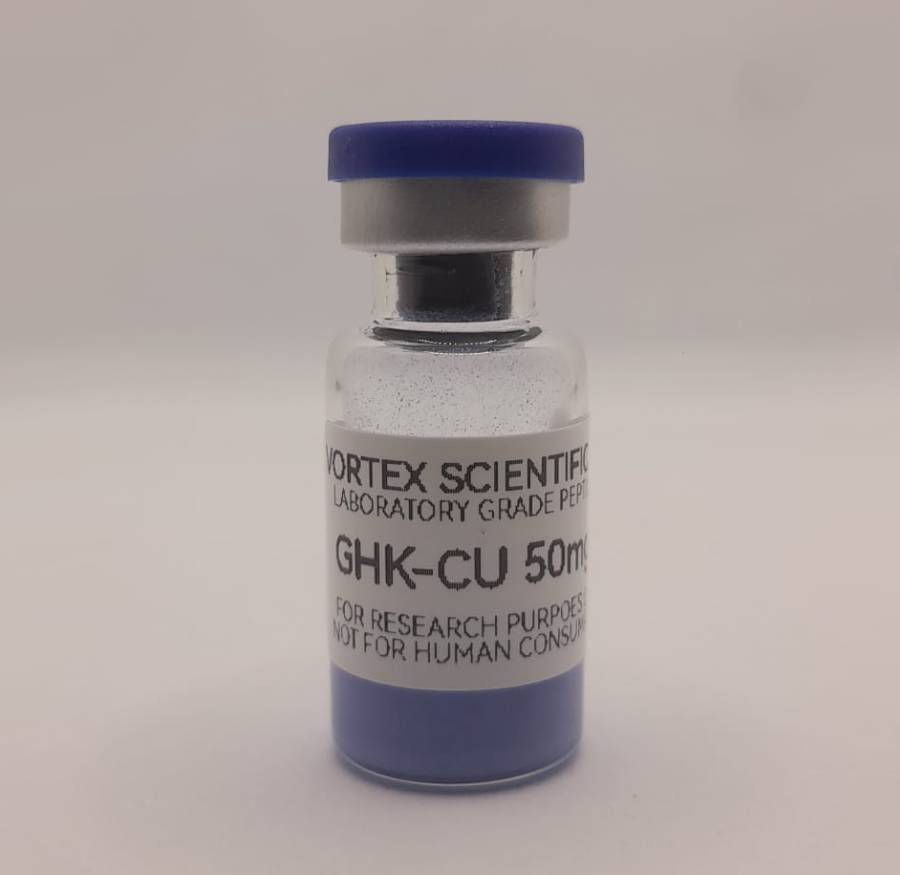
Description
Core Mechanisms of Action
Gene Modulation: Recent data indicates GHK-Cu can up- or down-regulate over 4,000 human genes (roughly 31.2% of the genome), essentially “resetting” DNA to a more youthful or healthy state.
Dermal Remodeling: It stimulates fibroblasts to increase the production of collagen, elastin, and glycosaminoglycans. Simultaneously, it modulates metalloproteinases (MMPs) to remove damaged tissue and facilitate new fiber formation.
Angiogenesis: It acts as a chemoattractant for capillary cells, promoting the growth of new blood vessels, which is critical for wound healing and hair follicle health.
Antioxidant & Anti-inflammatory: It reduces oxidative stress by increasing levels of antioxidant enzymes like superoxide dismutase and suppresses inflammatory cytokines such as TNF-alpha and IL-6.
Clinical & Research Findings
Skin Health: In a 12-week clinical trial of 71 women, topical GHK-Cu significantly increased skin density and thickness, resulting in a 67% reduction in wrinkle volume. Another study found it outperformed Vitamin C and Retinoic Acid in stimulating collagen production.
Wound Healing: Animal models demonstrate that GHK-Cu accelerates the healing of diabetic and ischemic wounds by stimulating rapid epithelialization and tissue contraction.
Hair Growth: Research suggests it can enlarge hair follicle size and extend the anagen (growth) phase, potentially reversing follicle miniaturization.
Internal Repair: Newer studies indicate potential therapeutic effects for COPD and Ulcerative Colitis, where it may promote mucosal healing through the SIRT1/STAT3 pathway.
Safety & Usage
Copper Toxicity: Some researchers recommend cycling the peptide (e.g., 8 weeks on, 4 weeks off) to prevent potential copper accumulation.
Side Effects: Topically, it is generally well-tolerated, though some users report mild irritation or redness at high concentrations.
Reviews
There are no reviews yet.